The Speaker’s Blueprint | 2 of 8
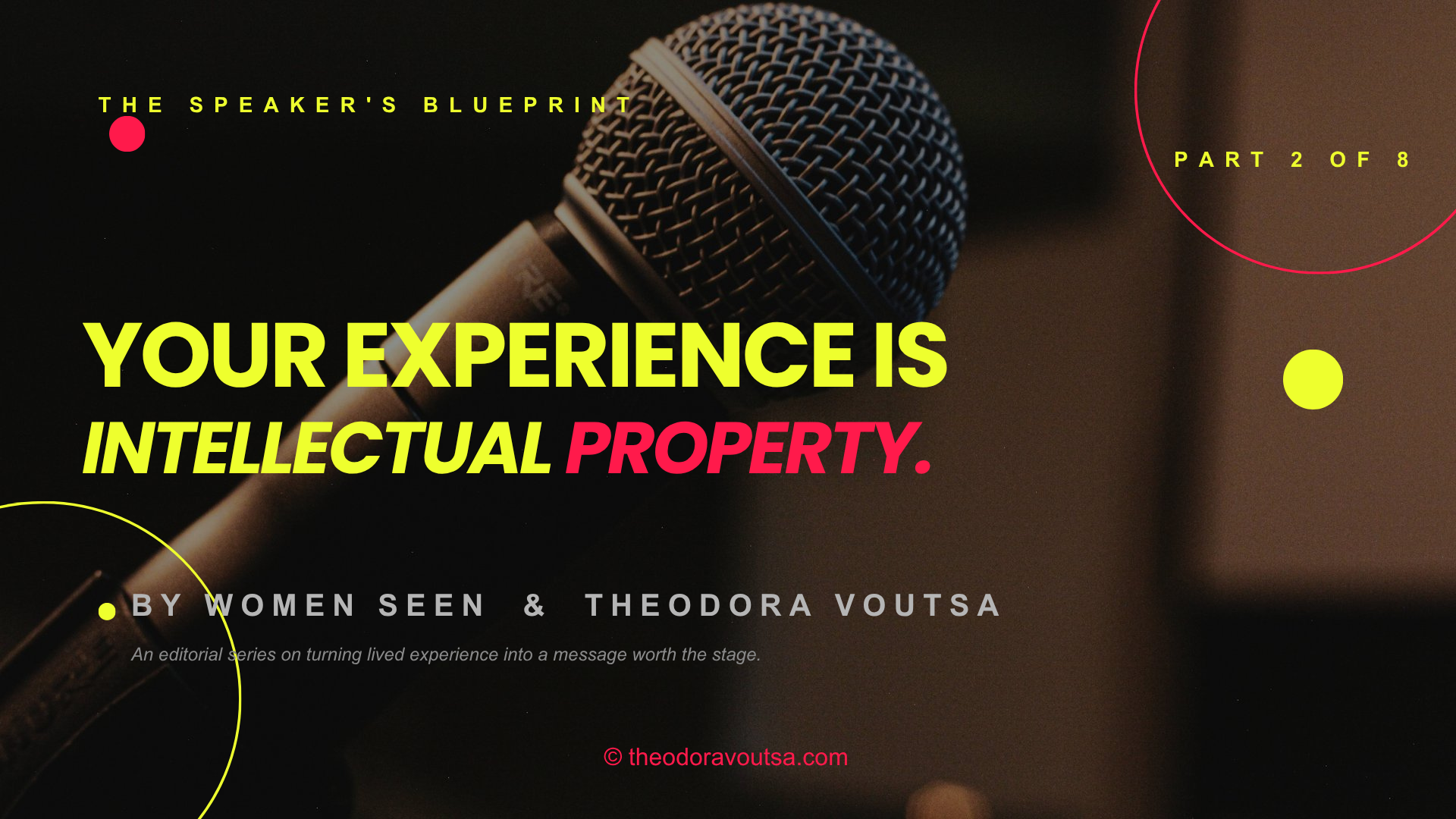
Your Experience Is Intellectual Property.
By Women Seen & Theodora Voutsa
There is something I have noticed after years of working with stories, actors, entrepreneurs and women who are exceptionally good at what they do.
The women who have the most valuable things to say are not always the ones who believe they have something worth saying.
They have built companies.
Led teams.
Navigated crises.
Made difficult decisions.
Started again when things fell apart.
Learned things the hard way.
And yet, when someone asks them to speak about their expertise, they often say:
“I don't know what I would talk about.”
Or:
“Everything I know is probably obvious to everyone else.”
Or my personal favourite:
“I'm not an expert in anything specific enough.”
Let's pause here.
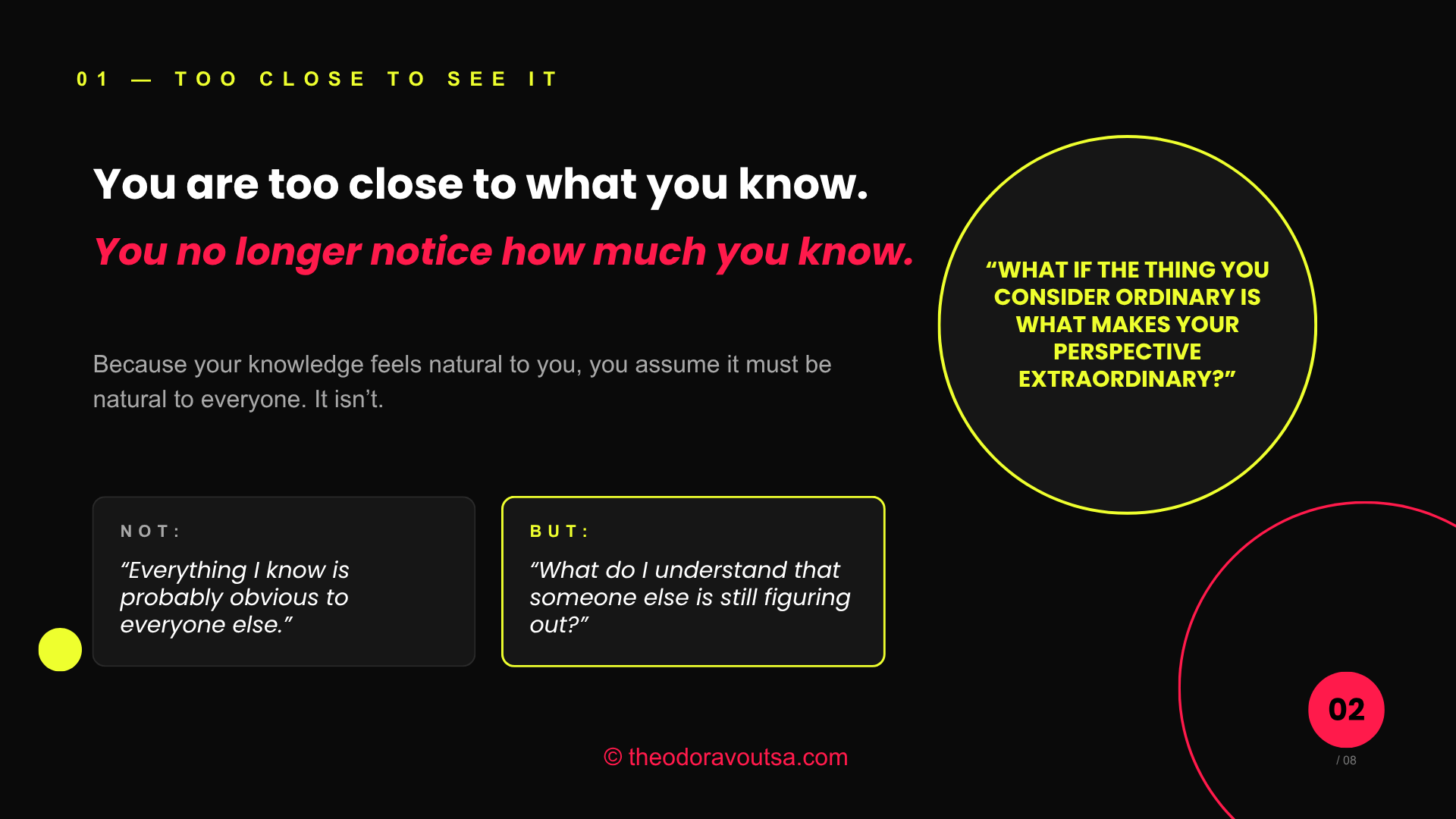
What if the very thing you consider ordinary about yourself is the thing that makes your perspective extraordinary?
You are too close to what you know.
When you have spent years working in a particular field, solving problems, making decisions and learning through experience, your knowledge becomes part of how you see the world.
You no longer notice how much you know.
You forget how many things you understand intuitively that someone else is still struggling to figure out.
You stop recognising the value of the decisions you make because they have become second nature.
And because your knowledge feels natural to you, you assume it must be natural to everyone.
It isn't.
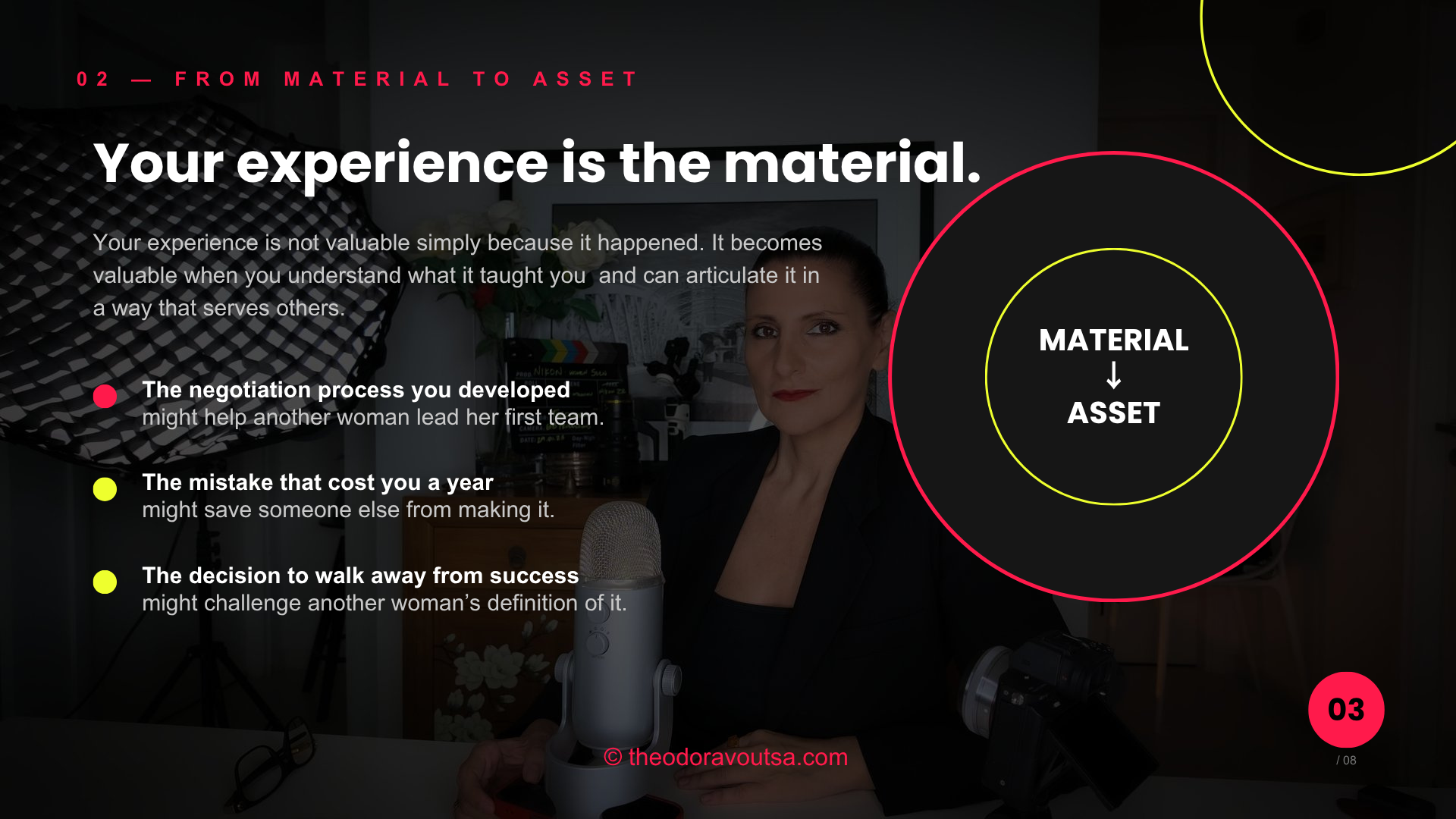
The process you developed to navigate a difficult negotiation might help another woman lead her first team.
The mistake that cost you a year of your life might save someone else from making the same one.
The decision to walk away from a successful career might challenge another woman's definition of success.
Your experience is not valuable simply because it happened.
It becomes valuable when you understand what it taught you and can articulate that knowledge in a way that serves others.
That is the difference between having experience and turning experience into intellectual property.
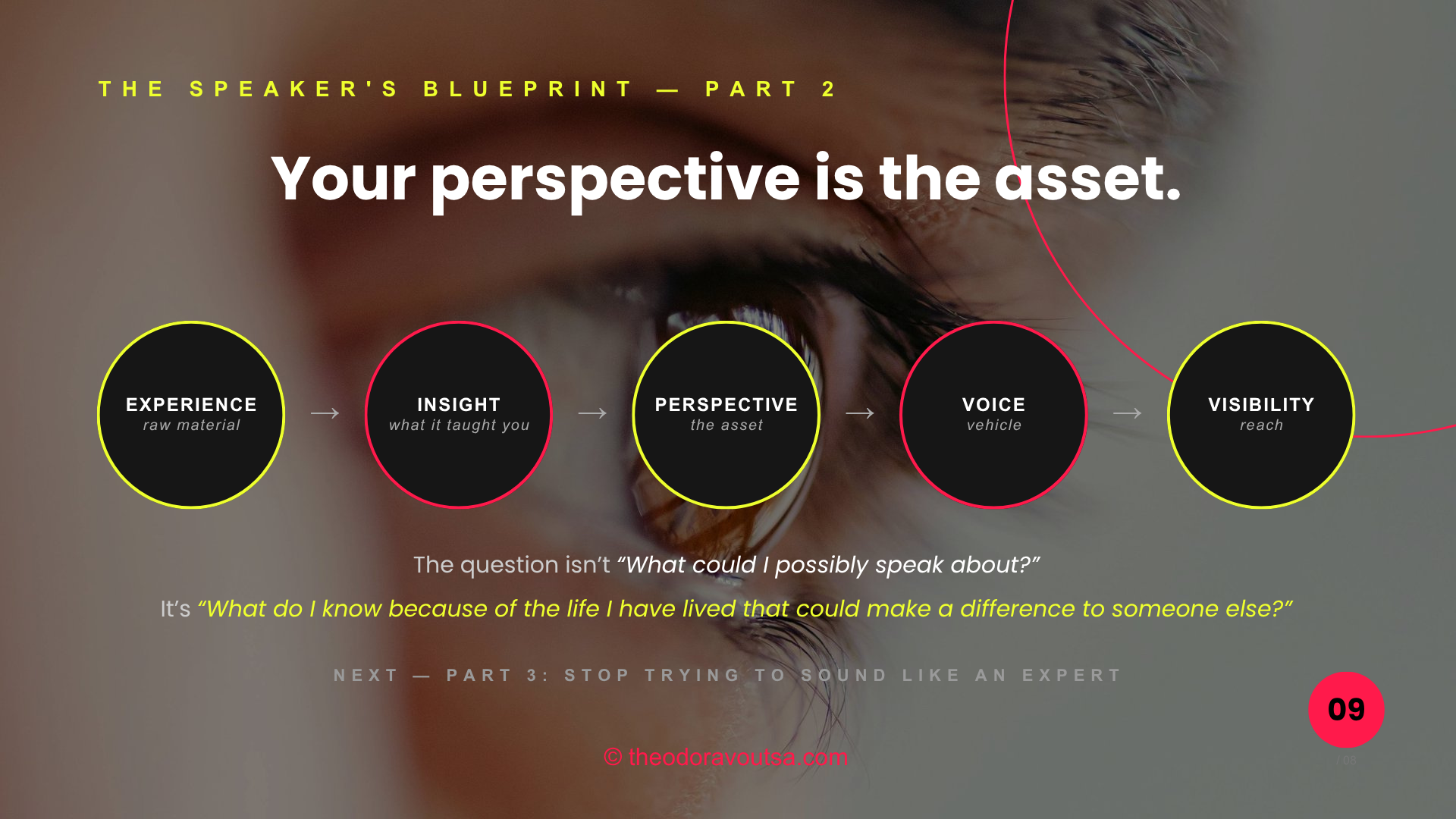
Your experience is the material. Your perspective is the asset.
Let me explain what I mean by intellectual property in the context of speaking.
I am not talking about owning the events of your life. Nor am I suggesting that every personal experience automatically becomes a proprietary idea.
I am talking about something more interesting.
The knowledge, frameworks, insights and ways of thinking you develop through your particular combination of experiences.
Two women can work in the same industry for twenty years and arrive at completely different conclusions.
One might believe leadership is about having the right answers.
The other might have discovered that the best leaders are the ones who know which questions to ask.
They have comparable experience. But they do not have the same perspective.
And perspective is what gives an idea its distinctiveness.
Think about the speakers you remember long after an event.
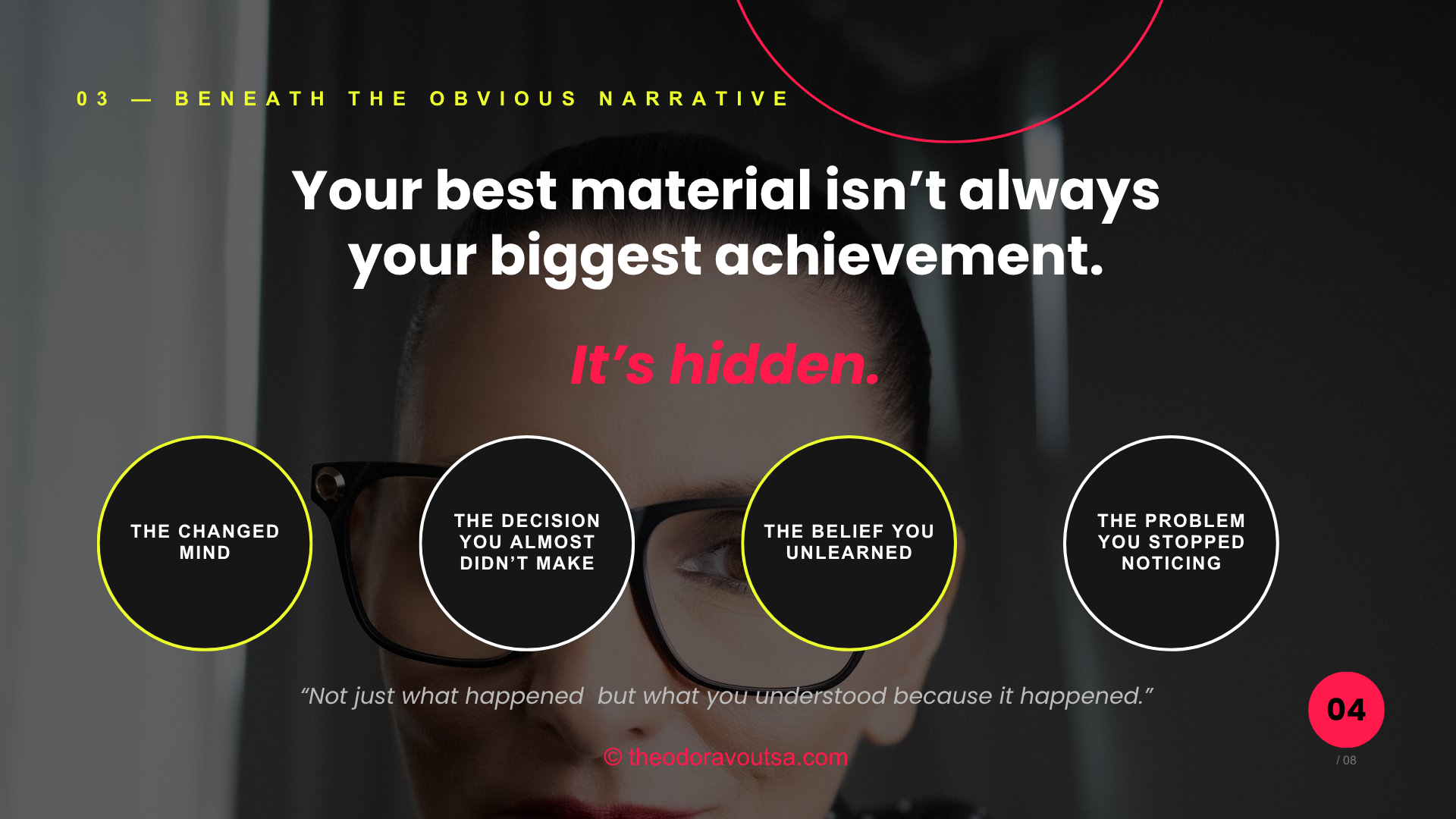
Often, it isn't because they told you something you had never heard before.
It is because they helped you see something familiar in a completely different way.
They gave language to something you had felt but couldn't explain.
They challenged an assumption you had never questioned.
They connected two ideas you had never considered together.
They made you think differently about something you thought you understood.
That is the power of a perspective.
And it is something you can develop, identify and communicate.
Stop asking, "What should I speak about?"
Start asking better questions.
When I work with women on their stories and their presence, I am interested in what sits beneath the obvious narrative.
Not just what happened, but what they understood because it happened.
Not just what they achieved, but what they discovered along the way.
Not just what they know, but how they came to know it.
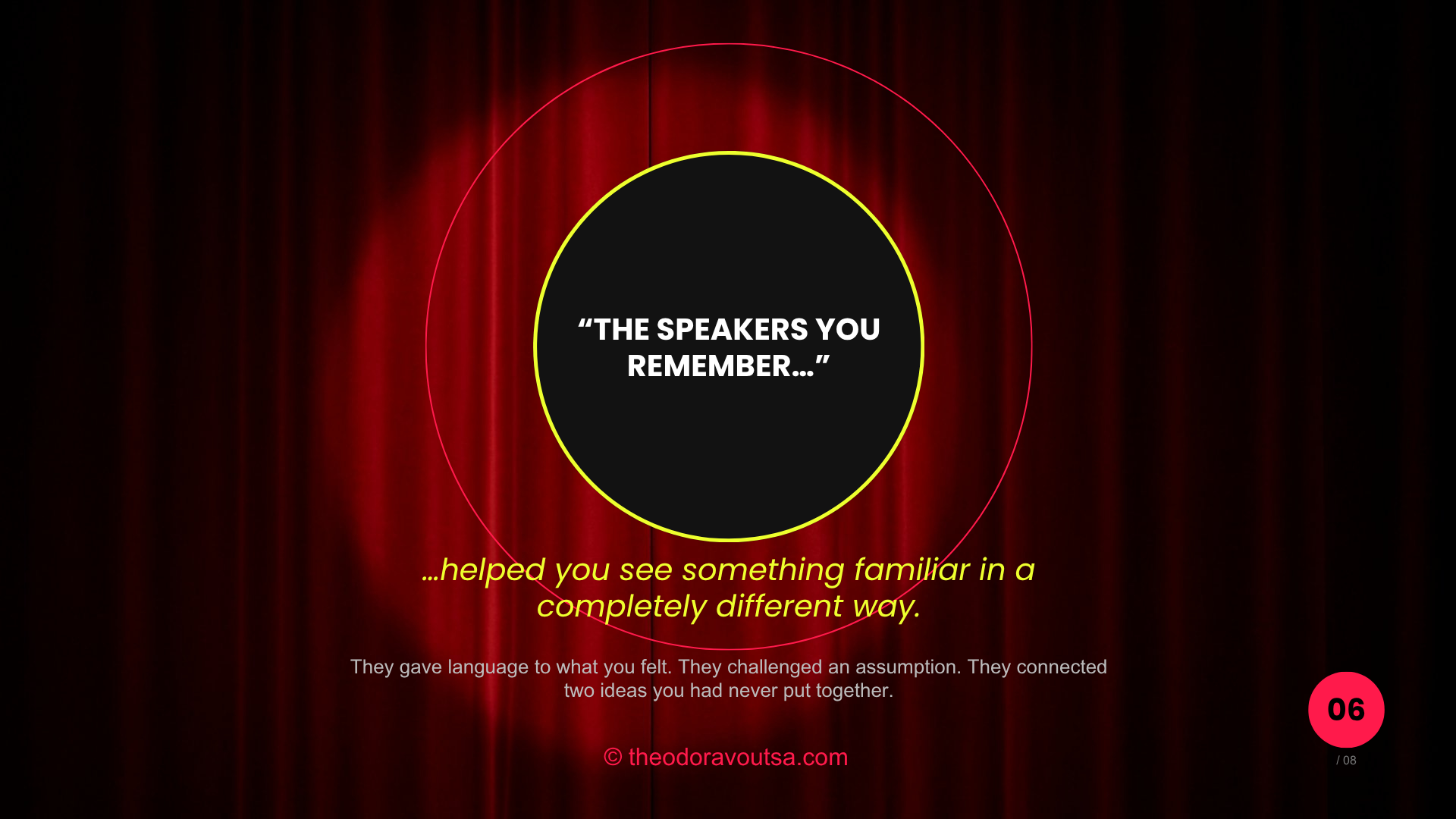
Because your most valuable speaking material is not necessarily hidden in your biggest achievement.
It might be hidden in the moment you changed your mind.
In the decision you almost didn't make.
In the belief you had to unlearn.
In the problem you solved so many times that you stopped realising it was a problem at all.
In the moment you understood that the rules everyone had been following were not necessarily the right rules.
These are the places worth investigating.
Here is an exercise I invite you to try.
Take a piece of paper and answer these five questions without trying to sound impressive.
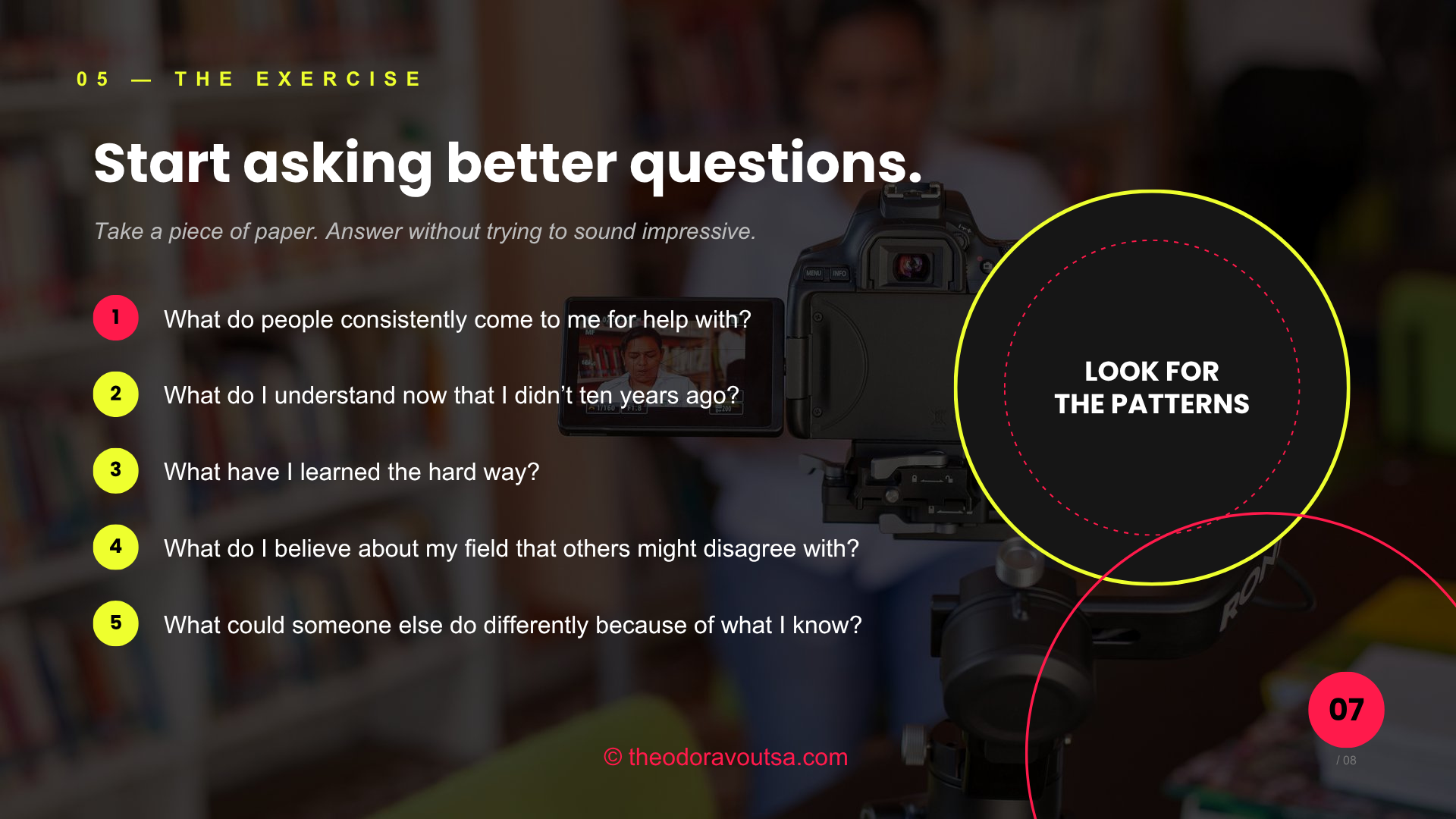
1. What do people consistently come to me for help with?
Look beyond your job title. What do colleagues, clients, friends or other leaders ask you to explain, solve or help them navigate?
2. What do I understand now that I didn't understand ten years ago?
Think about the beliefs you have changed, the lessons you learned through experience and the assumptions you no longer hold.
3. What have I learned the hard way?
Not every lesson needs to come from failure. Some come from years of repetition, observation, experimentation and making difficult choices.
4. What do I believe about my field that others might disagree with?
This is where your perspective begins to emerge. You do not need to be controversial for the sake of it. You need to be able to explain why you see things differently.
5. What could someone else do differently because of what I know?
This is the question that connects your experience to your audience.
It moves you from personal reflection to something useful, transferable and memorable.
Read your answers again.
Look for patterns.
Look for ideas that keep returning.
Look for the things you feel strongly about, the principles you have developed and the lessons you wish someone had taught you earlier.
You may begin to see the foundations of a talk, a keynote, a workshop or an entire body of work.
Not because you invented a new identity.
Because you finally recognised the value of the one you already have.
You don't need a new story. You need a clearer point of view.
In my work as a filmmaker and director, I have spent years observing people, listening to their stories and looking for what lies beneath the words.
As an acting teacher, I approach communication from another angle.
An actor doesn't simply memorise lines and repeat them.
She investigates what the character wants, what she believes, what stands in her way and what makes her see the world as she does.
The words are only the beginning.
The meaning comes from the person inhabiting them.
I believe the same is true when a woman stands on a stage, speaks in a boardroom or looks into a camera.
You can learn presentation techniques. You can improve your structure. You can work on your voice, your posture and your delivery.
All of that matters.
But before you decide how to communicate your message, you need to understand what your message actually is.
Otherwise, you risk becoming very polished at communicating ideas that could have come from anyone.
And the world doesn't need another generic talk about leadership, resilience or confidence.
It needs your particular understanding of those things.
It needs the conclusions you have reached, the questions you are willing to ask and the perspective you have earned through living, working, failing, learning and beginning again.
Your authority does not come from trying to sound like someone who knows everything. It comes from knowing what you know, understanding how you came to know it and being able to communicate why it matters.
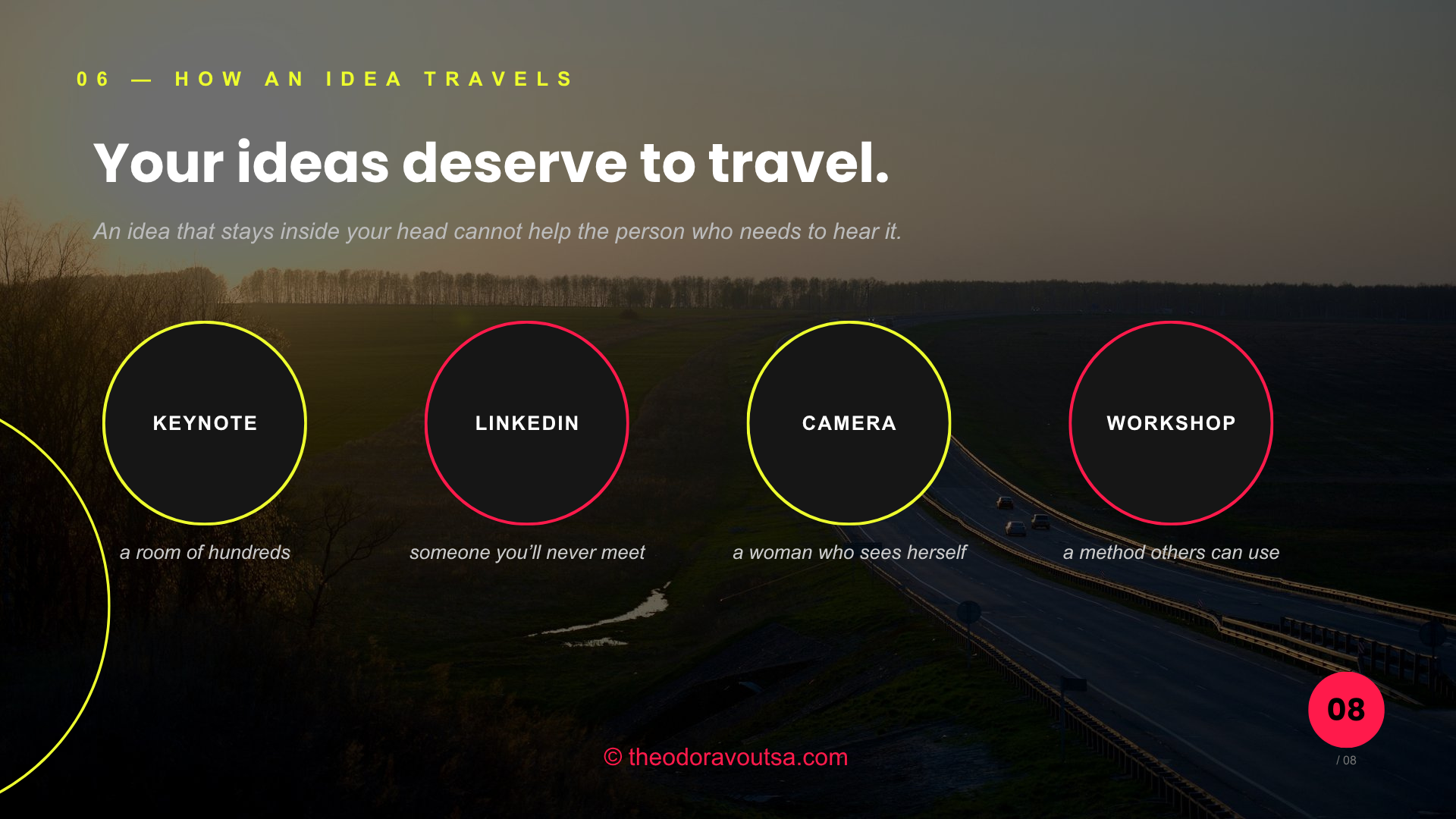
Your ideas deserve to travel.
Here is another thing worth remembering.
An idea that stays inside your head cannot help the person who needs to hear it.
Your experience can inform your leadership.
Your perspective can shape your business.
Your insights can help other women make better decisions.
But if you never articulate them, they remain largely inaccessible to the people who could benefit from them.
This is why visibility matters.
Not because you need to become a personal brand.
Not because you need to be everywhere on social media.
And certainly not because you need to turn every moment of your life into content.
Visibility matters because it creates a way for your ideas to reach beyond you.
A keynote can carry your thinking into a room of hundreds of people.
A LinkedIn article can reach someone you will never meet.
A conversation on camera can help another woman recognise something in herself.
A workshop can turn your experience into a method someone else can use.
Your voice becomes the vehicle through which your knowledge travels.
But first, you have to recognise that you have something worth sharing.
The question I want you to leave with
You do not need to have lived the most extraordinary life in the room.
You do not need to have the most impressive title.
You do not need to be the first person to speak about a particular subject.
You need to understand what your experience has taught you that might help someone else see, think or act differently.
So, instead of asking yourself:
"What could I possibly speak about?"
Ask yourself:
"What do I know because of the life I have lived and the work I have done that could make a difference to someone else?"
Stay with that question.
Don't dismiss the first answer because it feels too simple.
Don't assume everyone knows what you know.
And don't wait until you feel completely ready to take your own ideas seriously.
Your experience is the material.
Your perspective is the asset.
Your work as a speaker begins when you learn to recognise it.
This is The Speaker's Blueprint.
A series about turning what you know, what you have lived and who you are into ideas worth sharing — and learning to communicate them without losing yourself in the process.
By Women Seen & Theodora Voutsa
Coming next in Part 3: Stop Trying to Sound Like an Expert.
Because the more you try to perform expertise, the further you may move away from the very thing that makes your voice worth hearing.